
Blog Post 2 of 2 on Fluency
Helping primary school students become fluent readers
In many classrooms today, students are learning to decode words accurately through systematic phonics instruction. However, fluency is sometimes expected to develop naturally through reading time alone.
In reality, fluent reading rarely develops by chance. Many students, especially those who find reading effortful, need regular, supported opportunities to practise reading at the word, sentence and connected text level.
When fluency practice is engineered and fluent reading is modelled, reading becomes more automatic. This means a student’s attention can shift from decoding to understanding what they read.
What helps students develop reading fluency
Accuracy is achieved through systematic synthetic phonics instruction
To develop fluency, children must first read with accuracy. Teaching systematic synthetic phonics through the Little Learners Love Literacy® program ensures children build the knowledge and skills needed to decode words accurately.
With accuracy established, children can begin to develop automaticity in their word reading. The key to developing automaticity is practice.
Developing automaticity requires many opportunities to read and re-read words, phrases and sentences. This practice should be prioritised in the literacy block, revisited throughout the school day, and supported at home.
Let’s look at some routines and activities that support fluency development at the word, sentence and connected text level.
Word-level fluency practice
Fluency begins with accurate decoding and automatic word recognition.
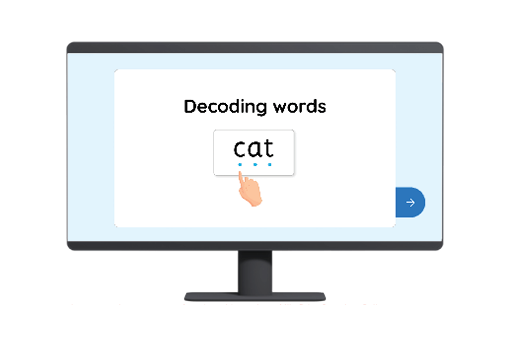
Little Learners Love Literacy® uses two quick warm-up routines: Speed Sounds followed by Speed Words. These routines give students lots of chances to practise decoding previously taught grapheme–phoneme correspondences.
Speed Sounds are available as card sets and on Little Learners Love Literacy® Online, while Speed Words are available on Little Learners Love Literacy® Online.
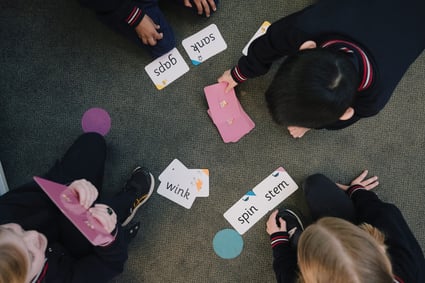
 Timothy Rasinski explains that repeated reading helps students move from accurate word recognition to automatic word recognition. A flashcard-only approach isn’t always very engaging for building automaticity, so we use a lot of games in Little Learners lessons.
One example is the Little Learners Read and Grab Word Game. This is a competitive and fun card game which aims to get children fluent at reading single words.
Other fun activities to improve fluency at a word level include the Little Learners bingo games and the Ka-Blam! word games. Ka-Blam! includes three different reading games that help students build fluency. Students have so much fun playing these games that they barely realise they’re practising reading. 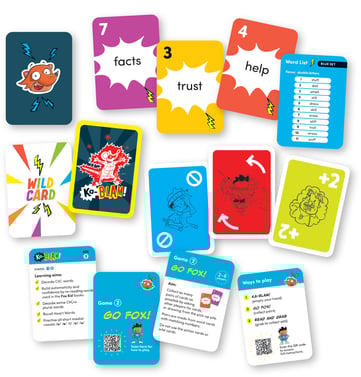
Sentence-level fluency practice
Once students can read individual words, they benefit from practising short phrases and sentences.
In Little Learners classrooms, this type of practice is supported through our decodable quizzes, such as Tim’s Quiz, the Wiz Kids Quiz and the Big World Quiz. These activities give students opportunities to read short, decodable questions using familiar grapheme–phoneme correspondences. Because the questions are engaging and often a little quirky, they generate plenty of classroom discussion. This supports the development of oral language, vocabulary and fluency.
Another fun activity to improve fluency at a word, phrase or sentence level is Read, write and draw. This activity supports fluency development as well as independent reading, spelling, handwriting and comprehension. The three levels of challenge make it a useful tool for differentiation within the classroom.
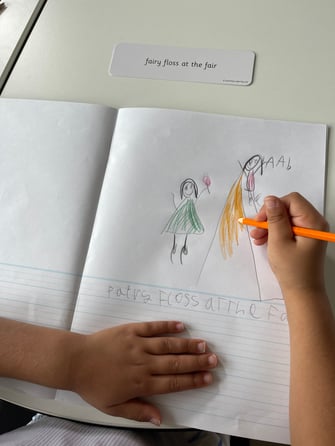
These short sentence activities help students begin to read smoothly across groups of words and prepare them for reading longer passages of connected text.
Connected text fluency practice
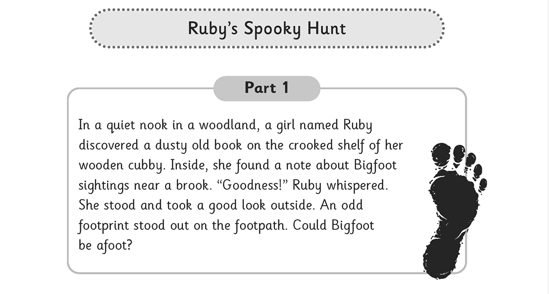
Fluency develops most strongly when students read connected text aloud with support. In Little Learners classrooms, this happens during small group reading, whole-class reading and partner reading. Students read decodable books together, often re-reading sections to improve fluency and comprehension.
Teachers model fluent reading, support students to track the text and guide them to notice punctuation and phrasing. These routines help students develop prosody and confidence as readers.
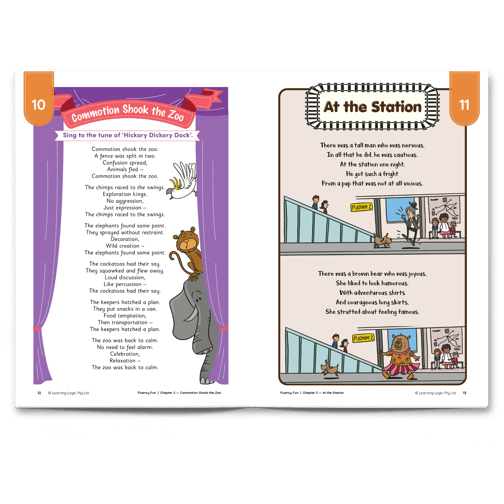
As Timothy Rasinski says, teachers don’t need to spend time sourcing appropriate texts for repeated reading and performance. Each book in our Little Learners Fluency Fun series includes 20–25 texts in a variety of genres including reader’s theatre, poems, songs, comics, nonfiction texts, short stories and more.
In our Year 2 program, reader’s theatre is built into the weekly plan with practice during the week and a performance scheduled for Day 5.
Modelling and support matter
Fluency instruction is most effective when students hear fluent reading and receive guidance as they practise.
During shared reading and small group reading, teachers can model phrasing, expression and pacing. It’s helpful to explain how punctuation and text features (such as capital letters, bold and italics) influence expression, including word stress, emphasis and intonation.
Activities such as choral reading and partner reading allow students to hear fluent models while also practising reading aloud themselves. Let’s take a closer look at choral reading.
Choral reading
In Little Learners classrooms, choral reading is a simple routine where the class reads a short decodable passage together, following the teacher’s model. The teacher begins by modelling fluent reading through echo reading, with students repeating each sentence before reading the whole passage together.
After reading, the passage is revisited for meaning as well as fluency, through Words of the Week and comprehension questions. Strong vocabulary supports comprehension, which in turn supports fluent reading.
Choral reading texts are available in the Teacher Activity Resource books and on Little Learners Love Literacy® Online.
Practising fluency beyond the classroom
Re-reading texts also plays an important role in building fluency.
When students take decodable books home, they often re-read a book several times. Each re-reading makes the text more familiar and helps students read more smoothly and confidently.
Families are also encouraged to read library books at home. Hearing a parent model fluent reading can help children develop prosody.
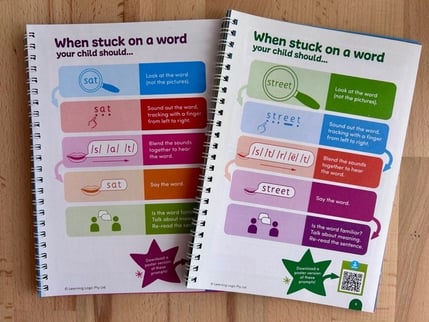
Many classrooms find the Home Reading Journal a handy way to track home reading, including library books. It also includes tips for parents, such as how to support their child when they get stuck on a word.
Children’s fluency develops over time
Fluency is not a skill that is mastered once, then finished. It continues to develop as students read increasingly complex texts.
Through regular decoding practice, supported reading of sentences and repeated reading of connected text, students gradually develop the accuracy, automaticity and prosody needed for fluent reading.
As these skills strengthen, students can devote more of their cognitive energy to the ultimate goal of reading: understanding and enjoying the text.
To learn more about why reading fluency matters and how to assess it, read our guide.
We hope this blog has been useful. Please don't hesitate to contact us if you have concerns and/or questions.